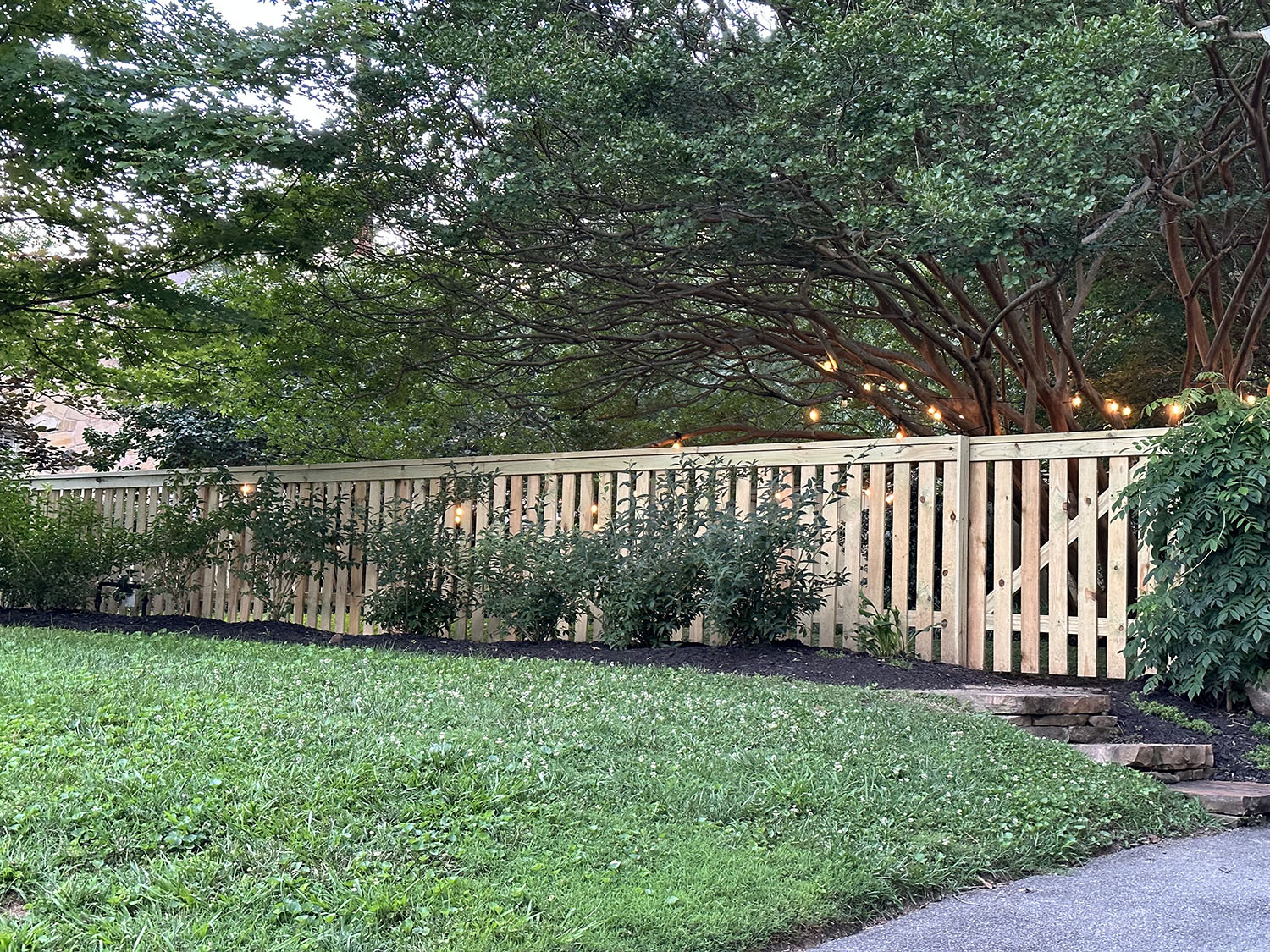
Anyone who has ever tried to plant a garden or dig a hole in East Tennessee knows the reality of our ground. Underneath that top layer of grass lies dense, stubborn, heavy red clay soil. Known geologically as Ultisols (or simply "East Tennessee red clay"), this soil presents a unique set of challenges for homeowners planning to build a fence.
Clay soil holds onto water like a sponge during spring rains, expanding and turning into a thick, heavy muck. In the heat of late summer, that same moisture bakes out, leaving the ground rock-hard and crisscrossed with deep cracks. This continuous cycle of expansion and contraction—known as shrink-swell behavior—puts tremendous stress on fence posts, causing improperly installed barriers to lean, heave, sag, or rot long before their time.
If you are planning a residential property upgrade in Knoxville, Powell, Farragut, or anywhere across Knox County, choosing the right fence material and installation technique is critical. Here is a comprehensive guide to selecting the best fence for Knox County's clay soil, how to engineer post footings that withstand ground movement, and how to protect your investment for decades to come.
Understanding the Challenge: Why Knox County Clay Soil Destroys Fences
To understand why fences fail in East Tennessee, you have to look at what happens below the surface. Clay particles are tiny and flat, packing tightly together with minimal drainage. This leads to three distinct mechanisms that threaten fence stability:
- Poor Drainage and Standing Water: Because clay absorbs water slowly, heavy rainfall causes water to pool around post bases. When wooden posts are encased in soil or improperly set concrete, the trapped moisture accelerates wood rot, post decay, and fungal growth.
- Frost Heaving and Expansion: In the winter, saturated clay freezes. As the water in the clay expands into ice, it exerts immense upward pressure on fence posts. If the concrete footing is not deep enough—or if the footing has "mushroomed" at the top during digging—the ground will lift the entire post out of alignment.
- Shrink-Swell Ground Shifts: Summer droughts draw moisture out of the clay, causing the soil around the post footing to shrink and pull away. This leaves a gap between the soil and the concrete footing. When heavy wind loads hit the fence line, the loose footing tilts, creating unsightly leaning posts.
Ranking the Best Fence Materials for Knox County Clay Soil
Not all fence materials respond to soil movement in the same way. The ideal fence for Knox County clay must balance structural flexibility with structural integrity.
1. Aluminum Fencing: The Top Overall Choice
When evaluating long-term performance in clay soil, ornamental aluminum fencing comes out on top.
- Weight Advantage: Aluminum is lightweight compared to wood or steel. This lower dead-weight puts significantly less downward force on post footings, reducing the risk of settling or sinking in soft, wet clay.
- Rackability: High-quality aluminum fence panels are rackable, meaning they can follow the natural rolling slopes and hills of East Tennessee terrain without requiring rigid stepping or leaving large bottom gaps where soil expands and contracts.
- Impervious to Soil Moisture: Unlike wood, aluminum will never absorb water, swell, split, or rot. Powder-coated aluminum posts resist chemical reactions caused by the acidic nature of East Tennessee clay.
For homeowners seeking a clean look that handles terrain shifts effortlessly, exploring a professionally engineered aluminum fence installation offers the ultimate low-maintenance solution.
2. Vinyl Fencing: Sleek, Durable, and Rot-Proof
Vinyl (PVC) fencing is another outstanding option for clay soil environments.
- Moisture Resistance: Vinyl posts and panels do not degrade when exposed to constant ground moisture. Clay soil holds water directly against the post walls, but PVC remains entirely unaffected by rot, decay, or insect damage.
- Flexibility Under Wind Loads: Modern commercial-grade vinyl fencing features internal reinforcement channels and flexible PVC polymers. When heavy storms blow across Knox County, the panels flex slightly under wind pressure rather than snapping, reducing levers on the underground concrete footing.
- Low Upkeep: Because clay soil splatters upward during heavy rainstorms, light-colored fences can pick up red clay stains along the bottom rails. Unlike wood, which permanently absorbs red clay iron oxides, vinyl can be hosed off with water and mild detergent.
If you want complete privacy that easily handles moisture and clay splatter, review the key factors between vinyl vs. wood fencing before committing to a material.
3. Chain Link Fencing: Excellent Utility and Flexibility
Chain link fencing remains one of the most flexible and practical choices for large yards or property perimeters in East Tennessee.
- Maximum Wind Flow: The woven wire diamond pattern allows wind to pass right through. Because there is virtually no wind resistance, the underground post footings experience almost zero lateral force, preventing posts from leaning over time.
- Adaptable Structural Framework: Steel posts set deep in concrete provide a solid anchor, while the flexible fabric easily adapts to ground shifts caused by seasonal wet and dry cycles.
To see how vinyl-coated or galvanized chain link can fit your property's footprint, check out the options for custom chain link fencing designed for residential and commercial yards.
4. Wood Privacy Fencing: Classic Beauty Requiring Proper Engineering
Wood privacy fencing is deeply popular throughout East Tennessee neighborhoods. While wood offers natural beauty and complete visual screening, it is the most vulnerable material to clay soil conditions if installed incorrectly.
- Moisture Retention Risk: Wood pickets and posts absorb water from wet clay soil. Without proper ground clearance and post treatment, ground-line rotting can occur within a few short years.
- High Wind Resistance: Solid privacy boards act like a sail in heavy wind gusts. When wind pushes against a heavy wood panel, that force transfers directly down into the clay-bound footing. If the post hole was dug improperly, the post will tilt.
Homeowners set on classic timber aesthetics must ensure heavy pressure-treated posts or steel post conversions are used. If you already have a classic wood installation on your lot, learning what to know before staining a new fence is critical to keeping water out of the wood grain.
Installation Mechanics: How to Dig and Set Fence Posts in Clay Soil
The secret to a long-lasting fence in Knox County lies in what happens underground. Even the highest-grade fencing material will fail if the post footing is improperly installed.
Digging Below the Frost Line
In Knox County, the official frost depth is typically between 12 and 18 inches. However, because clay soil expands so significantly, fence posts should always be set at a minimum depth of 24 to 36 inches (or at least one-third to one-half the height of the fence above ground). Anchoring deep into the dense subsoil below the active freeze-thaw zone locks the footing in place.
Bell-Shaped Hole Digging (Avoiding the "Mushroom Effect")
When digging post holes in sticky clay using an auger, the sides of the hole can become smooth and slick—a condition known as "glazing." Furthermore, if the top of the hole widens during digging, it creates a bell shape pointing upward.
When concrete is poured into a top-heavy hole, the resulting footing looks like an upside-down cone or mushroom. When wet clay freezes and expands, it pushes upward against the underside of that top-heavy concrete lip, pop-jacking the entire post right out of the ground.
The Correct Method:
- Dig post holes with straight, vertical sides.
- Flatter or widen the bottom of the hole slightly using a hand digger, creating a true bell-shaped base at the bottom.
- Rough up the slick, glazed clay walls with a digging bar so the concrete can grip the surrounding soil structure.
Gravel Drainage Bases Are Essential
Never pour concrete directly onto raw clay at the bottom of a post hole. Always pour 3 to 6 inches of crushed gravel (such as crushed stone or gravel aggregate) into the bottom of the hole before setting the post.
This gravel cushion creates a drainage pocket, allowing water to drain away from the bottom of the post rather than pooling beneath it and accelerating rot or ice-jacking.
Crown the Concrete Collar Above Grade
When filling the hole with concrete, bring the concrete level 1 to 2 inches above the surrounding ground line. Trowel the top of the wet concrete to form a sloped collar (or crown) angling away from the post. This forces rainwater to shed outward onto the grass rather than pooling around the base of the post.
Protecting Wood Fences from Clay Splatter and Moisture Damage
If you choose a wooden fence for your Knox County property, taking preventative steps during and after installation will prevent premature rot and unsightly iron oxide staining.
- Maintain a 2-Inch Ground Clearance: Never let wood pickets rest directly on clay soil. Pickets should hang 2 to 3 inches above the ground line. This stops the wood from wicking ground moisture upward and prevents lawnmower damage.
- Apply High-Quality Oil-Based Stain: Unsealed wood absorbs water rapidly, causing the boards to warp, twist, and rot as the surrounding clay dries and wets. Applying a deep-penetrating oil stain creates a hydrophobic seal that repels moisture and prevents red clay stains from setting deep into the wood grain. To protect your timber from regional weather cycles, review these tips on when and why you should stain your fence.
- Consider Steel Post Conversions: Using steel posts set in concrete, wrapped or hidden by wood trim, gives you the traditional warmth of a wooden privacy fence with the underground strength of steel that never rots in clay.
Working with Knox County Terrain and Local Regulations
Beyond soil type, building a fence in Knox County requires navigating rolling topography and local residential regulations.
Handling Slope and Grade Shifts
Knox County is famous for its hills, ridges, and low-lying hollows. When building over uneven clay terrain, contractors use two primary methods:
- Racked Fencing: The fence panels follow the exact contour of the ground, maintaining a consistent gap along the bottom rail. Rackable aluminum and chain link work best for this.
- Stepped Fencing: The fence panels remain completely level, stepping down hill slopes in stair-step fashion. This method is common for rigid wood panels or vinyl privacy sections, though it leaves triangular gaps beneath the low ends that may require landscaping fills.
Local Zoning and Permit Guidelines
Before digging into Knox County clay, always check local zoning rules regarding setbacks, sightlines, and height limits. Standard residential backyards generally allow up to 6-foot privacy fences, while front yard barriers are usually restricted to 4 feet. Furthermore, always call 811 (Tennessee 811) before any digging takes place to mark underground electrical, gas, water, and fiber optic lines.
Summary Checklist for Building in Clay Soil
When planning your upcoming installation across Knoxville and East Tennessee, keep this quick checklist in mind:
- Select aluminum, vinyl, or chain link for maximum long-term resistance to ground moisture and soil movement.
- Dig post holes 24 to 36 inches deep, past the active freeze-thaw surface layer of clay.
- Create straight-walled or bell-bottomed post holes—avoid top-heavy mushroom shapes.
- Place 3 to 6 inches of aggregate gravel at the base of every hole for bottom drainage.
- Crown the concrete footings above ground level so surface water runs away from posts.
- Keep wood pickets elevated 2 inches above the clay surface and seal them with an oil-based stain.
Partnering with an experienced local contractor ensures your fence is built to handle the unique demands of East Tennessee ground. At Cantrell Fence & Stain, our local crews understand the exact digging depths, footing requirements, and material selections required to keep your fence straight, secure, and beautiful for decades.